
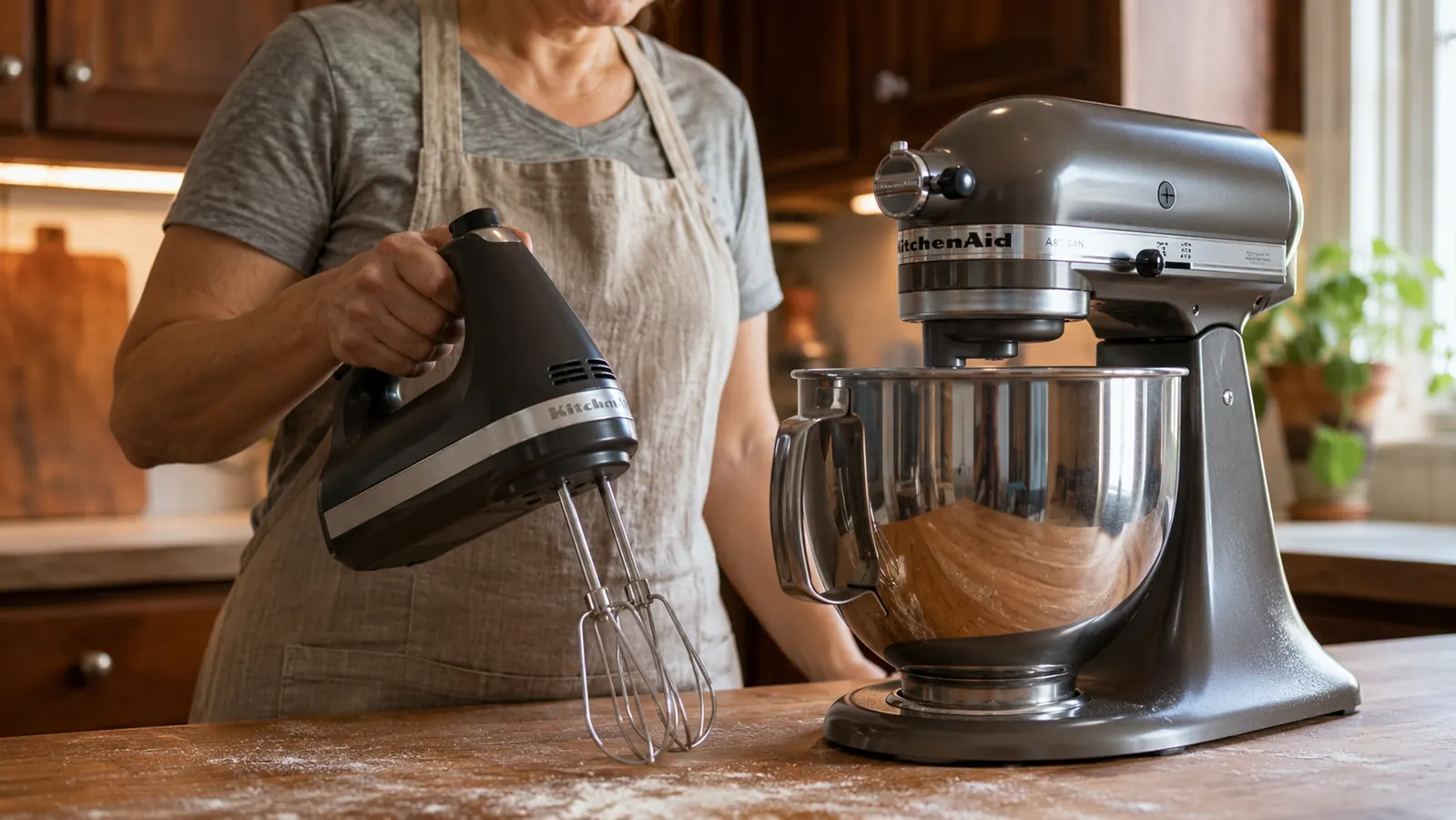
My kitchen has exactly one drawer wide enough to hold a mixer, and for two years that drawer held an actual argument I kept having with myself. Did I need a stand mixer taking up a permanent stretch of counter next to my stove, or could a hand mixer handle everything I actually bake on a normal Tuesday night? I ended up testing both side by side for six months, a KitchenAid hand mixer that lives in that drawer, and a KitchenAid stand mixer a friend loaned me so I could compare them fairly instead of guessing from a product page. After making the same banana bread, the same buttercream, and the same batch of dinner rolls in both, here's the honest answer: a KitchenAid hand mixer and a KitchenAid stand mixer solve two different problems, and most home cooks only really need one of them.
If you bake a few times a month, whip cream for a Sunday dessert, or mix a bowl of mashed potatoes for a holiday dinner, the hand mixer is probably the right call. If you bake bread every week, mix stiff cookie dough by the pound, or want to walk away from the mixer while it works, the stand mixer earns its space. Here's how they actually stack up, category by category, based on using both in the same kitchen for six months straight.
| KitchenAid Hand Mixer | KitchenAid Stand Mixer | |
|---|---|---|
| Best For | Everyday mixing, quick bakes, small batches | Bread dough, heavy cookie dough, big batches |
| Motor Feel | 5-speed motor, light in the hand, no wrist strain | Higher-torque motor built to push through stiff dough |
| Storage | Lays flat in a drawer or cabinet shelf | Needs a dedicated stretch of counter or a heavy shelf |
| Bowl Setup | Works in whatever bowl you already have out | Fixed stainless bowl, several quarts, sold with the machine |
| Attachments Included | Beaters and a whisk attachment | Paddle, dough hook, and wire whisk |
| Hands-On Time | You hold it the whole time it runs | Runs hands-free while you do something else |
| Cleanup | Rinse two beaters, wipe the housing | Wash the bowl, attachment, and often a splash guard |
| Price Tier | Budget-friendly entry point | A meaningful investment for a permanent appliance |
How I Actually Tested Both
I set a simple rule before I started: same recipes, same week, same kitchen, no cheating by picking the easiest job for one machine and the hardest for the other. Over six months I made banana bread, whipped cream for two different pies, buttercream for a birthday cake, mashed potatoes for a Sunday dinner, and two full batches of dinner rolls that needed real kneading. I timed setup, timed cleanup, and paid attention to which one I actually reached for first when I hadn't planned ahead, since that's the truest test of which tool wins in a real week.
The pattern showed up fast. For anything under five minutes of mixing, my hand went straight for the drawer where the KitchenAid hand mixer lives, every single time, without thinking about it. For the dinner rolls, I reached for the stand mixer without hesitation, because kneading dough by hand with a hand mixer is a genuinely bad time and I wasn't going to do it twice just to prove a point. That split held up consistently enough that I trust it as a real answer, not a guess.
Where the KitchenAid Hand Mixer Wins
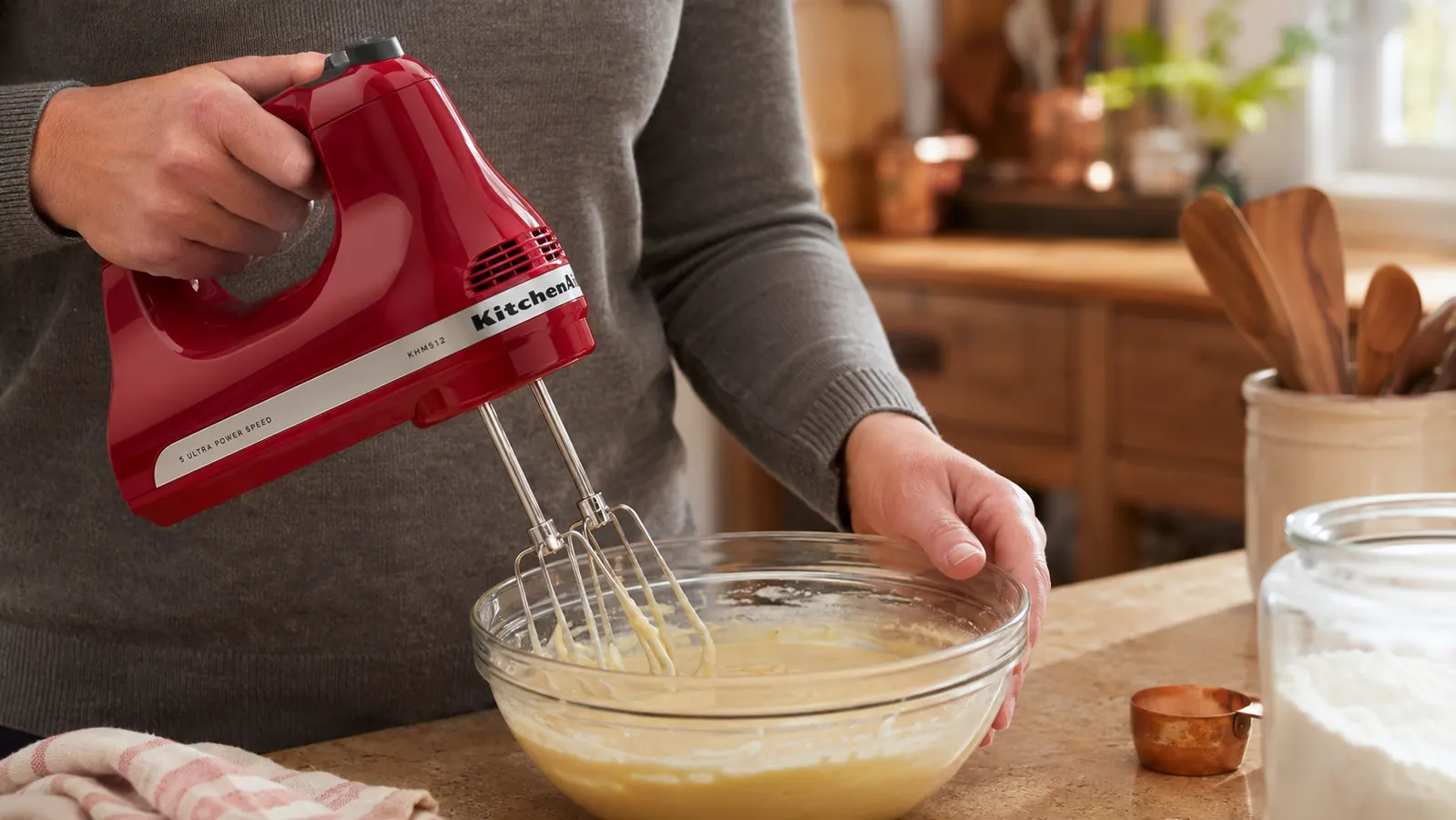
The KitchenAid hand mixer wins on storage, and that matters more than people admit until they've actually lived with a stand mixer hogging permanent counter space. Mine sits flat in a drawer next to the measuring cups, and I can have it out, plugged in, and running in under ten seconds. There's no lifting a heavy stand mixer off a high shelf, no clearing counter space next to the toaster, no deciding a job isn't worth the hassle for a small bowl of whipped cream. A KitchenAid hand mixer with five speeds handles whipped egg whites, cake batter, and mashed potatoes without any of that setup, and it's light enough that my wrist doesn't ache after ten straight minutes of mixing.
It also wins on speed for small jobs. If I need to whip cream for one pie, I'm not pulling a stand mixer off a shelf, attaching a whisk, and washing a stainless bowl afterward for a two-minute job. I grab the hand mixer, whip directly in whatever bowl is already sitting dirty from the pie filling, rinse the beaters, and I'm done. For the majority of my baking, which is small-batch, a hand mixer is simply less friction, and less friction is often the difference between actually baking something on a Tuesday and deciding it's not worth it.
Where the KitchenAid Stand Mixer Wins
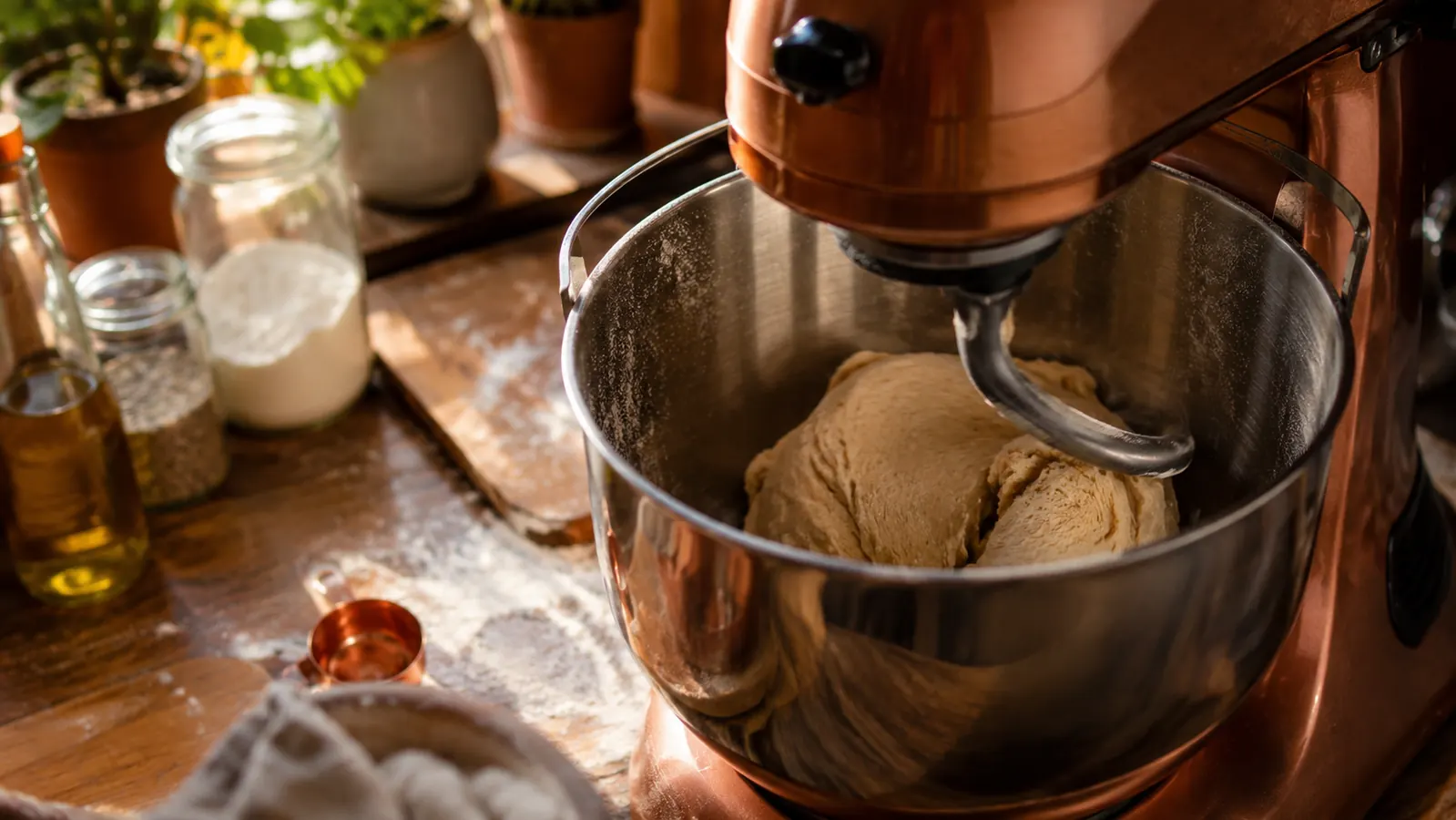
The stand mixer wins the moment dough gets stiff. Bread dough, thick cookie dough, and anything that needs real kneading will fight a hand mixer and can strain its motor over time if you push it too hard too often. A stand mixer's dough hook does the kneading while I walk away to prep the pan, answer the door, or referee an argument between my kids. That hands-free part is the real advantage: I'm not standing at the counter holding a mixer for eight minutes straight, I'm doing something else while the machine does the work.
It also wins on capacity. The stand mixer's bowl holds several quarts, which means I can double a cookie recipe or mix a full batch of potatoes for a crowd without splitting it into two rounds. A hand mixer can technically work in a bigger bowl too, but you're holding it the entire time, and your arm knows the difference between a two-minute job and a ten-minute one. If you regularly bake in volume, that difference adds up fast.
The Attachments You'll Actually Use
The hand mixer comes with a set of beaters and a whisk attachment, and honestly, that covers almost everything a casual baker does. The beaters handle cake batter, cookie dough that isn't too stiff, and frosting. The whisk handles whipped cream and egg whites. I keep both in the same drawer as the mixer itself, so there's no hunting through a cabinet for the right piece before I can start.
The stand mixer's three core attachments, paddle, dough hook, and wire whisk, cover a wider range, and that's the point of owning one. But I'll be honest about how often I actually swap them: the paddle gets used constantly, the whisk occasionally, and the dough hook only shows up when I'm actually making bread or rolls, which for me is maybe twice a month. If your baking rarely touches dough that needs kneading, you're paying for a capability you'll use a handful of times a year.
Tired of holding a mixer over a bowl every time you bake?
The KitchenAid hand mixer handles the everyday stuff, cake batter, whipped cream, mashed potatoes, without eating your counter space or your whole evening on cleanup.
Amazon Check Today's Price on Amazon →What Actually Fits Your Kitchen
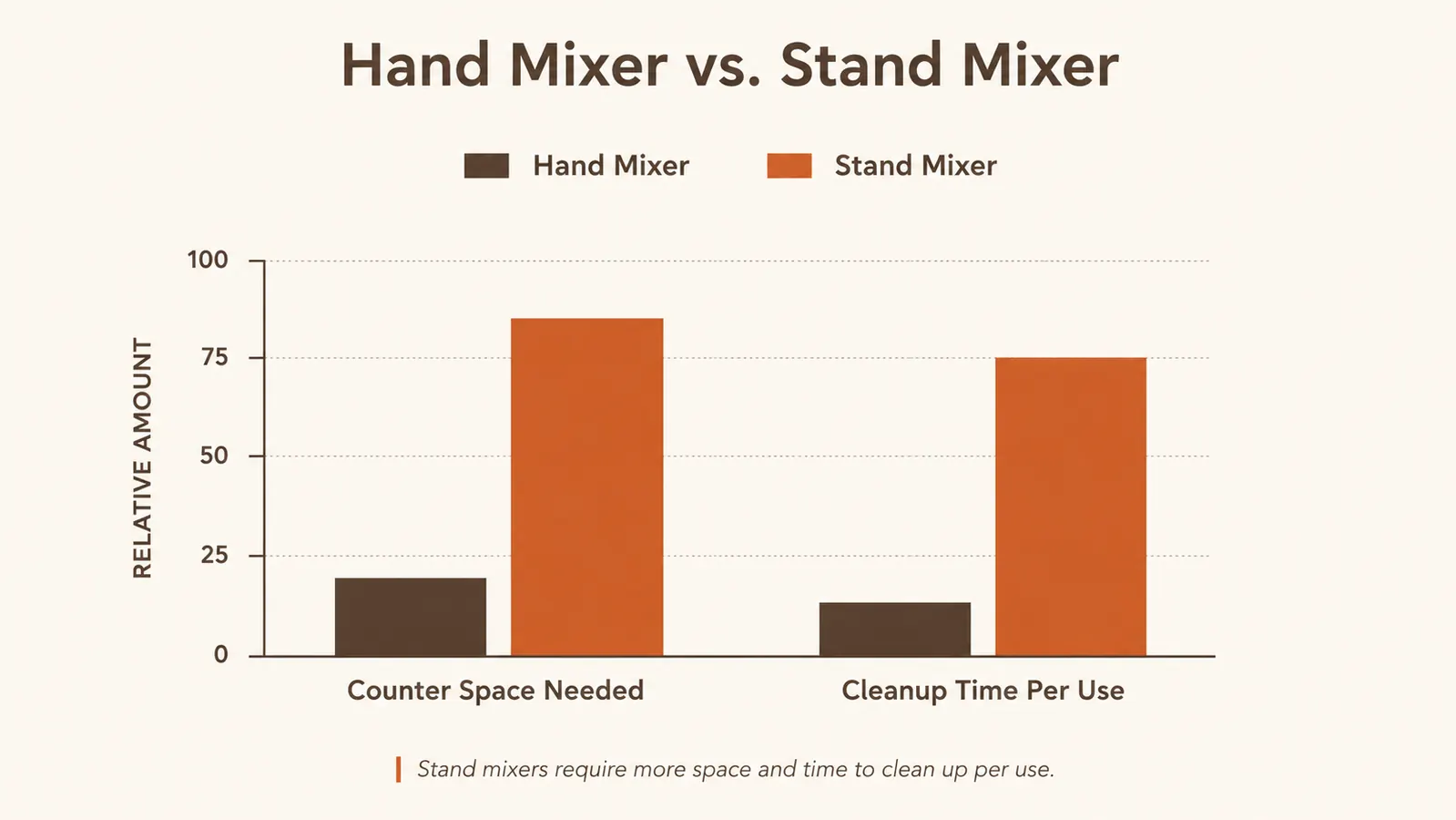
Before deciding based on features, look at your actual counter. My kitchen has a narrow stretch between the stove and the sink, and that's it. A stand mixer permanently parked there means losing that space for cutting boards, drying dishes, or setting down a hot pan. If your counter is already full, a hand mixer that lives in a drawer is the realistic choice, no matter how nice a stand mixer looks sitting out in kitchen photos.
If you do have a dedicated stretch of counter, or a cabinet shelf at a workable height, the stand mixer's footprint stops being a dealbreaker. Some home bakers build their whole setup around one, kept out permanently so there's zero setup time before a bake. That's a real advantage if you bake often enough to justify giving up the space for it, and if lifting a heavy appliance down from a shelf every time would talk you out of using it at all.
The Cleanup Difference Nobody Mentions
A hand mixer's cleanup is two beaters and a quick wipe of the housing. That's the whole job. A stand mixer means washing the bowl, the paddle or hook, and often a splash guard, plus wiping down the machine itself since it usually stays out and collects flour dust and countertop grease between uses. Neither is genuinely hard, but if you're mixing something quick on a weeknight, the hand mixer's cleanup is faster in a way that adds up over dozens of uses a year.
Noise, Cords, and Small Kitchen Realities
Neither mixer is quiet, but they're loud in different ways. The hand mixer runs at a higher pitch that's over in a couple of minutes, so it never really bothers anyone. The stand mixer runs longer and lower, and if you're kneading dough for eight or ten minutes while someone's on a video call in the next room, they'll notice. It's not a dealbreaker, but it's the kind of thing you don't think about until you're living with it.
Cord length and outlet placement matter more than they should too. My hand mixer's cord easily reaches any bowl on my counter or even the stovetop if I'm finishing a sauce. The stand mixer stays wherever its outlet is, which in my case meant picking one fixed spot and building my whole prep routine around it. If your kitchen doesn't have an obvious permanent spot near an outlet, that's worth thinking through before buying a stand mixer at all.
Durability After Regular Use
Six months isn't long enough to promise anything about how either machine holds up over years, but the early signs matter. The KitchenAid hand mixer's motor hasn't shown any strain, and it shouldn't, since I've kept it to the jobs it's built for and haven't tried to force it through stiff dough. The stand mixer's motor handled every kneading session without slowing down or overheating, which is exactly what you'd expect from a machine designed for that job in the first place. The real durability question isn't which motor is stronger, it's whether you're using each one for what it was actually built to do.
Where I've seen wear on hand mixers in the past, mine included, is the beaters themselves after heavy use in stiff mixtures they weren't meant for. Stick to batters, whipped cream, and frosting with a hand mixer and that's rarely an issue. Push it into bread dough regularly and you're asking for trouble sooner than later. That's really the whole comparison in one sentence: pick the tool that matches the job, and both of these hold up fine for years.
Who Should Buy Which
If you bake a few times a month, whip cream, mix pancake batter, or make frosting for the occasional cake, get the KitchenAid hand mixer. It costs less, stores easily, and handles almost everything a casual home baker actually needs on a normal week. If you bake bread weekly, mix stiff dough regularly, or want a machine that runs unattended while you do something else, the stand mixer is worth the counter space and the bigger commitment. I use both now, but if I could only keep one, it would be the hand mixer, because most of what I actually bake in a normal week doesn't need more than that.
Most weeks, this is the only mixer you'll reach for
If your baking looks more like weeknight cake batter than weekly bread dough, the KitchenAid hand mixer covers it without asking for a single inch of permanent counter space.
Amazon Check Today's Price on Amazon →