
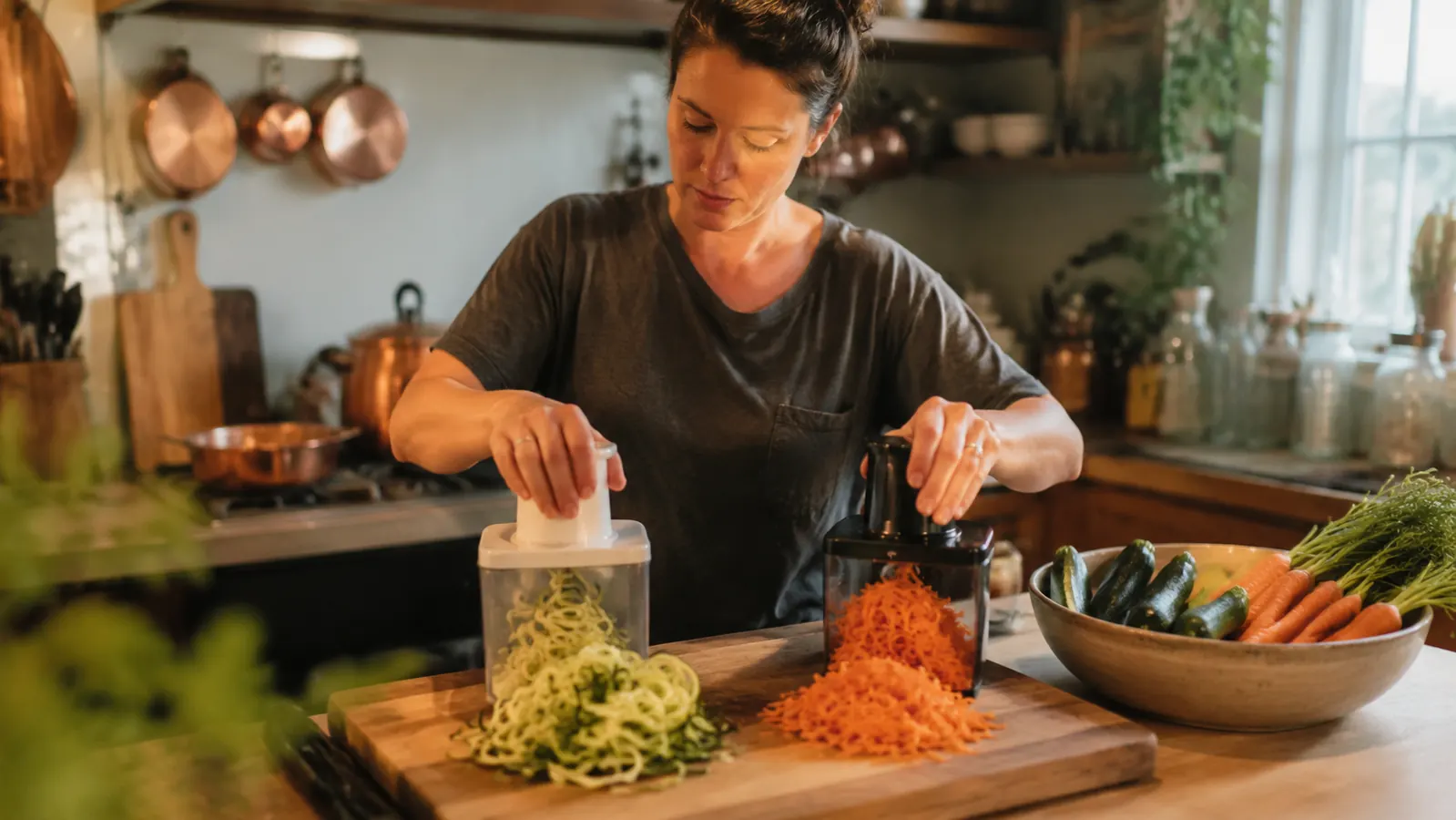
The drawer under my stove has room for exactly one more gadget, and for almost a year the two finalists were a vegetable spiralizer and a mandoline slicer. Every recipe blog acts like the choice is obvious, buy the spiralizer, get curly noodles, move on with your life. I've had the Brieftons 5-Blade Vegetable Spiralizer on my counter for six months now, so the same week I needed long zucchini ribbons for a pasta swap and paper-thin potato slices for a gratin, I put the Brieftons spiralizer up against a mandoline I borrowed from my sister for two full weeks of testing. I ran both tools side by side on real vegetables pulled straight from my own crisper drawer, not the perfect uniform produce you see in a product photo, and I wrote down exactly what the Brieftons spiralizer and the mandoline each did instead of trusting my memory afterward.
Here's the short version before the spec-by-spec breakdown. If what you actually want is long curly zucchini noodles, spiral sweet potato for a stir fry, or ribbon-cut cucumber for a salad, the Brieftons spiralizer wins outright, it is built for exactly that job and nothing else in my kitchen does it as well. If you need thin, even, flat slices for potato chips, a gratin, or julienned carrots for a slaw, a mandoline is the better tool, and I would not try to force the Brieftons spiralizer into that role. They are not really competing for the same job most nights, but since most kitchens only have room to keep one gadget within easy reach, here is exactly how the Brieftons spiralizer and a standard mandoline stack up against each other, spec by spec, based on two weeks of my own counter time.
| Brieftons 5-Blade Vegetable Spiralizer | OXO Good Grips Chef's Mandoline Slicer | |
|---|---|---|
| Price range | Moderately priced | Mid-range to higher, varies by model |
| Cut shapes available | 5 interchangeable blades: angel hair, fettuccine, ribbon, and chip cuts | Straight slices and julienne strips only, no spiral shapes |
| Learning curve | A few tries to get the crank rhythm even and steady | Simple back-and-forth slicing motion, familiar right away |
| Blade exposure | Blades sit inside the spiralizer body, mostly enclosed during use | Blade sits exposed beneath the food carriage on every single pass |
| Cleanup | 5 blade inserts to hand-wash, main body is dishwasher safe | One blade platform, quick rinse, blade itself needs careful hand-washing |
| Storage footprint | Blades nest inside the spiralizer body as one compact unit | Flat and slim, slides into a drawer easily |
| Best for | Long spiral zucchini noodles, curly sweet potato fries, salad ribbons | Thin even potato slices, julienned carrots, gratins |
How I Actually Tested Both
I did not run a lab test with a stopwatch and a clipboard. I worked both gadgets through my real weeknight prep for two weeks, on the same rushed schedule I always cook on, starting the timer on my phone the moment I pulled out the cutting board. Some nights it was zucchini noodles under marinara because that is what my daughter would actually eat without complaint. Some nights it was a mandoline run of potatoes for a Sunday gratin, sliced thin enough to layer evenly in the dish. I logged prep time, how many vegetables ended up as unusable scraps or nubs, and how long cleanup actually took afterward, since that is the part most spec sheets skip entirely and usually the part that decides whether a gadget keeps earning its drawer space.
What surprised me was how differently the two tools handled the same basic task of turning a vegetable into something thinner. The Brieftons spiralizer needed a steady, even push on the crank to get consistent noodles, something that took me two or three zucchini before my wrist found the right rhythm. The mandoline, once I locked in the thickness dial, produced identical slices from the first pass to the last, no learning curve at all beyond respecting the blade. Neither tool struggled with the vegetables themselves, both handled zucchini, carrots, sweet potatoes, and cucumbers without any real resistance. The difference was entirely in what shape came out the other side, and how much I had to think about my hands while getting there.
Where the Brieftons Spiralizer Wins
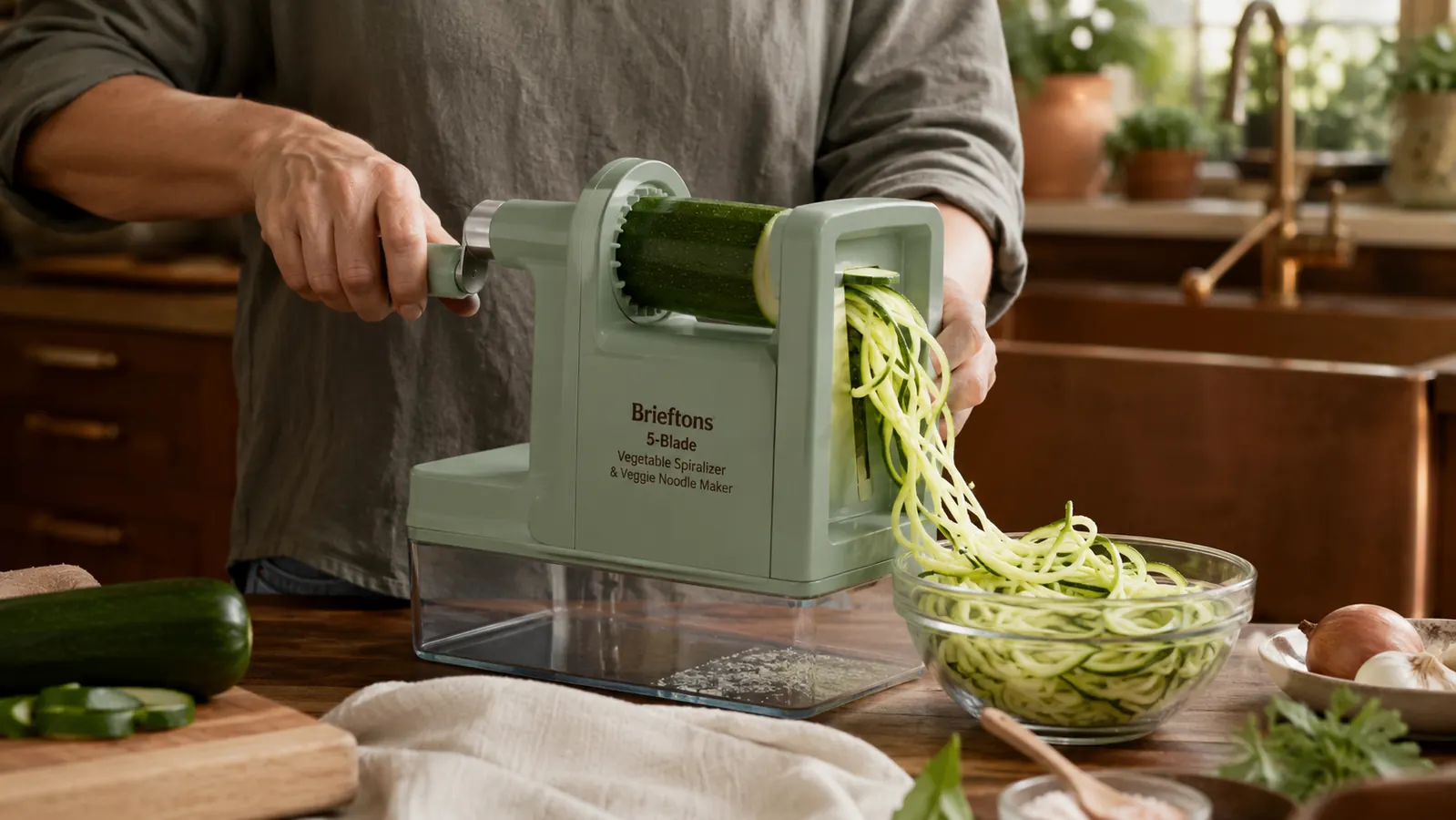
For anything I wanted in a long curly shape, the Brieftons spiralizer was not just better, it was the only tool that could do the job at all. Zucchini noodles, sweet potato spirals for a stir fry, even a cucumber ribbon salad for a barbecue, all came out looking like something from a restaurant plate rather than a home kitchen. The five interchangeable blades meant I was not locked into one noodle thickness either, angel hair for a light pasta swap, thicker ribbons for a heartier stir fry, and a chip-cut blade I did not expect to use much but now reach for on curly fry nights.
The enclosed blade design also made it the easier tool to hand to my kids for supervised help, since the blades sit mostly inside the spiralizer body rather than sitting exposed the way a mandoline's does. My younger one can load a zucchini into the carriage and turn the crank himself, with me standing right there, in a way I would never let him do with the mandoline. That single difference made the Brieftons spiralizer the gadget that actually got used on busy weeknights, since it did not require me to hover over every single pass the way the mandoline did, and it turned prep into something my son could help with instead of something he watched from across the counter.
The mandoline makes better potato chips. The Brieftons spiralizer makes the noodles my kids will actually eat. Most weeknights, that second job matters more in my house.
Where a Mandoline Wins
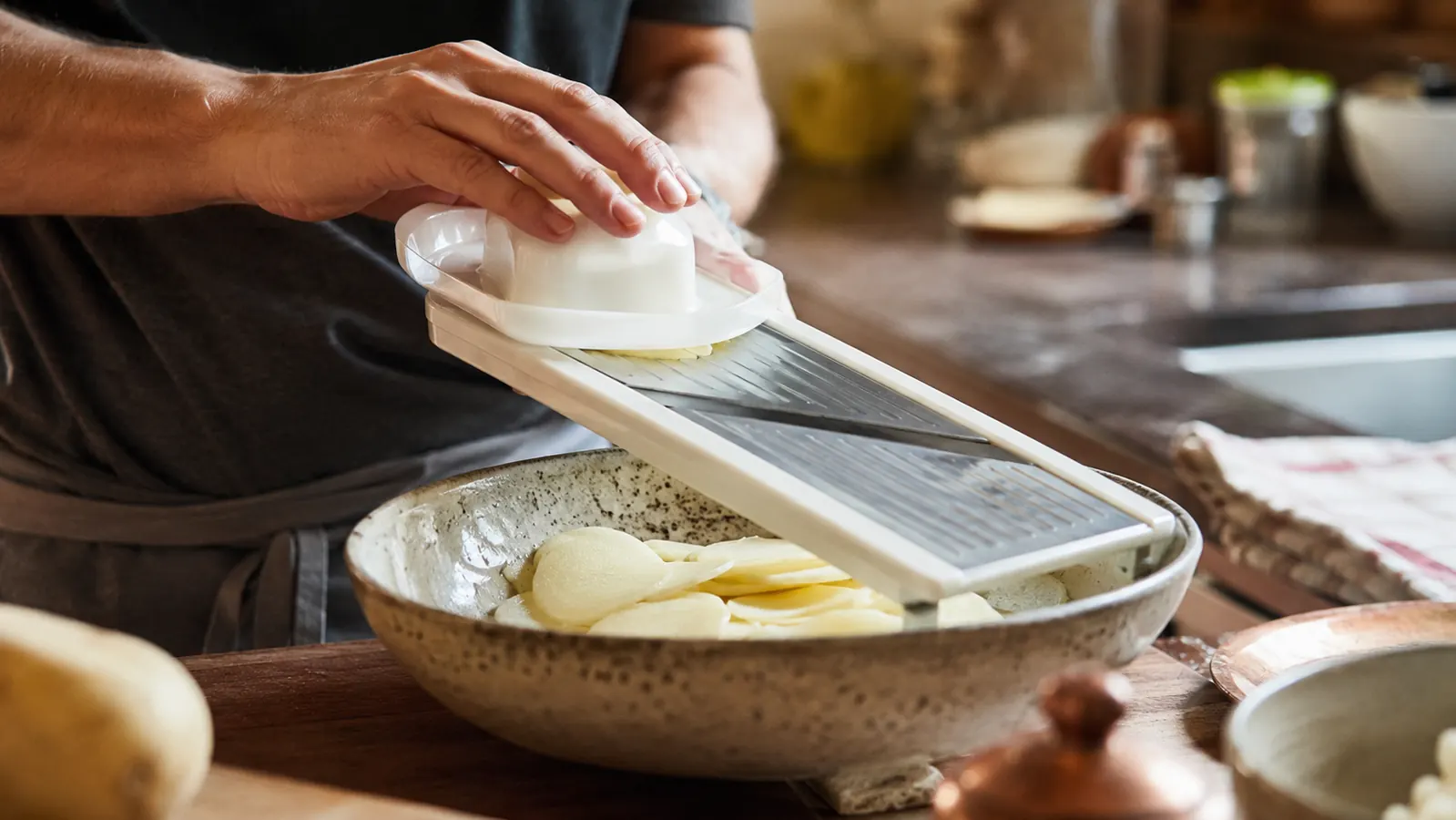
The moment I needed thin, even, flat slices, the mandoline pulled ahead fast and there was no arguing with it. A Sunday potato gratin needs slices that are uniform enough to layer and cook evenly, and the mandoline delivered that in a fraction of the time a knife would take, with far more consistency than the spiralizer's straight-cut blade managed on the same potato. Julienned carrots for a slaw and thin cucumber rounds for a quick pickle were also faster and cleaner on the mandoline, since the spiralizer simply is not built to produce a flat slice at all, no matter which blade insert you swap in.
The tradeoff is the exposed blade, and it deserves calm, practical attention rather than a warning label you skim past. The blade sits directly beneath the food carriage on every pass, which means the food holder guard is not optional, it is the difference between a clean slice and a nicked finger. I got in the habit of using the guard every single time, even on a stubby end piece I was tempted to just hold by hand, and that one habit is what kept two weeks of testing free of any close calls. A mandoline is not a dangerous tool when you respect it, but it does ask for more attention at the counter than the spiralizer's more enclosed design does.
If curly zucchini noodles and colorful veggie ribbons are the actual goal, this is the one built for it.
See today's price and current availability for the Brieftons 5-Blade Vegetable Spiralizer on Amazon before you decide.
Amazon Check Today's Price on Amazon →The Cleanup Difference Nobody Mentions
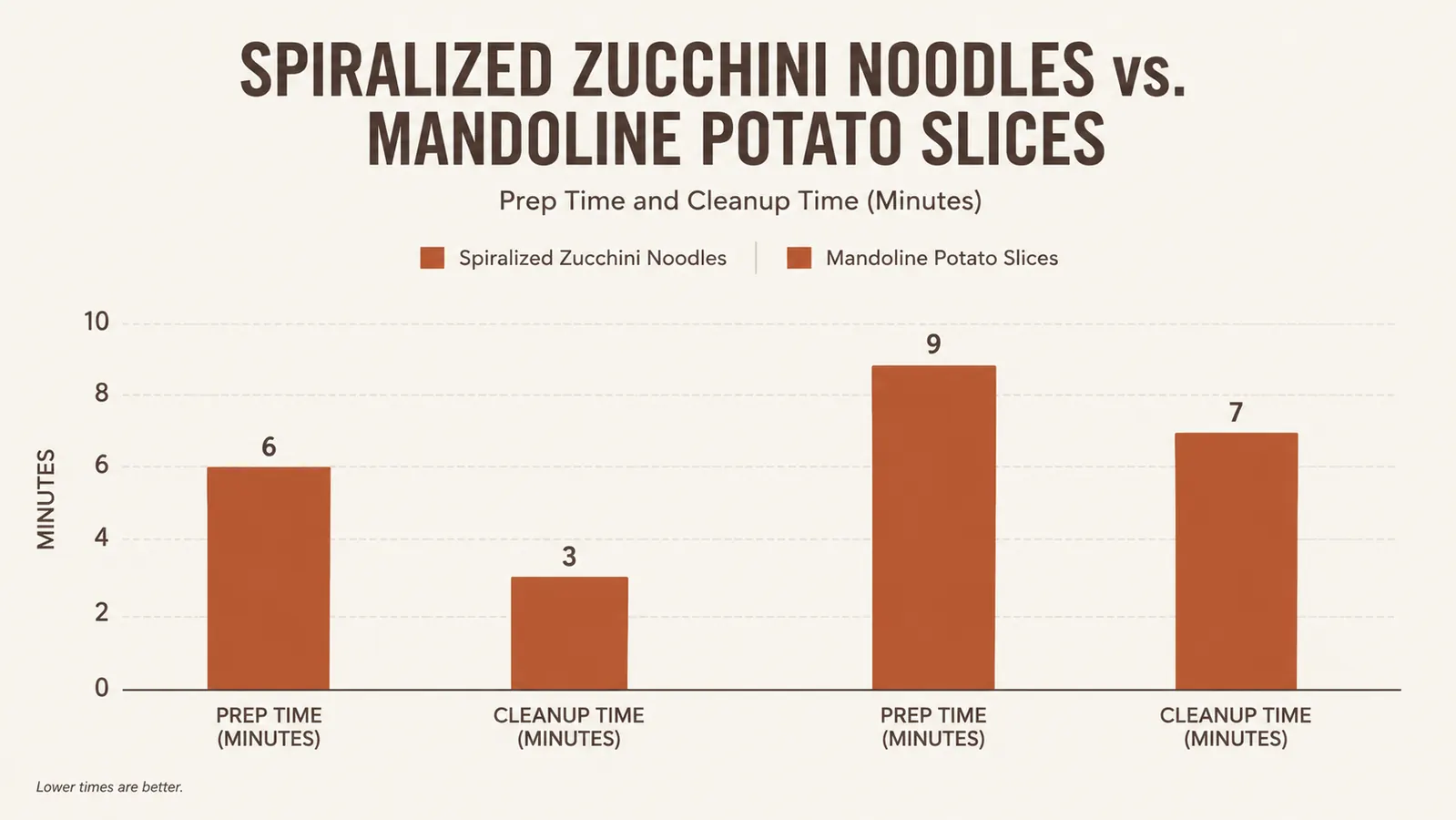
Cleanup ended up being closer between the two than I expected, but it still tipped slightly toward the Brieftons spiralizer over two weeks of real use. The main body and the carriage are dishwasher safe, and even the five blade inserts, which need to be hand-washed for safety, take under five minutes standing at the sink since they rinse clean easily under running water. The mandoline's single blade platform is technically less to wash, but hand-washing a blade that thin and exposed is a slower, more careful process than tossing dishwasher-safe parts into a rack, and I never felt comfortable rushing it.
Storage told a similar story. The Brieftons spiralizer's blades nest inside its own body, so it is one compact unit that takes up one spot in the drawer, no loose parts to lose. The mandoline is flatter and slides in easily too, but I kept its blade guard in a separate small container after nearly grabbing the wrong end once while reaching past it for something else. Neither gadget was a real storage burden in my kitchen, but the spiralizer's all-in-one design meant one less thing to keep track of on a rushed weeknight.
What I Wish I'd Known Before Choosing Either One
I assumed going in that this would come down to price, since both gadgets sit in a similar budget range. It didn't. What actually decided it, prep after prep, was how much thinking each tool asked of me before I could even start. The Brieftons spiralizer asks almost nothing once a vegetable is loaded and trimmed flat on one end, just turn the crank at a steady pace and let the noodles fall into the bowl. The mandoline asks me to stay present for every single pass, guard in hand, which is a small mental tax that adds up on a night when I'm already juggling homework and a sink full of other dishes.
I also underestimated how much the vegetable itself mattered to the result. Zucchini, carrots, and sweet potatoes all worked well in the Brieftons spiralizer, but very short or oddly shaped vegetables left more of a core behind than I expected, usually a couple inches I ended up chopping by hand instead of wasting. The mandoline had the opposite problem, it handled short or irregular vegetables just fine, but soft, watery vegetables like a very ripe tomato turned to mush rather than a clean slice. Knowing which vegetable I was actually working with mattered as much as which gadget I reached for.
Real Weeknight Scenarios, Side by Side
On a normal Tuesday, zucchini noodles for three people, the Brieftons spiralizer had noodles in the pan in about six minutes including setup, and my daughter ate them without the usual negotiation that comes with a plate of actual pasta. On a Sunday with company coming, the mandoline turned four large potatoes into gratin-ready slices in under four minutes, something that would have taken me fifteen minutes with a knife and never come out this even. Neither tool would have handled the other job well. Trying to spiralize a potato into thin gratin slices produces spirals, not the flat layers a gratin actually needs, and trying to mandoline a zucchini into noodles just gives you rectangles, not the long curly strands that make the dish work.
Who Should Buy Which
If your actual goal is more veggie noodles, spiral fries, and salad ribbons on the weeknight table, the Brieftons 5-Blade Vegetable Spiralizer is the right tool, and it is the one that has stayed on my counter rather than getting pushed to the back of a cabinet. If your kitchen leans more toward gratins, chips, and thin even slices for slaws and pickles, a mandoline earns its spot instead, exposed blade and all, as long as you commit to using the food holder guard every time. A handful of households genuinely want both, since the two tools solve different problems rather than competing for the same one, but if you can only add one gadget to a crowded drawer, let the shape of the food you actually want to make decide it for you.
If curly noodles beat flat slices on your weeknight menu, this is the tool that keeps up
Check today's price on the Brieftons 5-Blade Vegetable Spiralizer and see if it's in stock for your kitchen.
Amazon Check Today's Price on Amazon →