
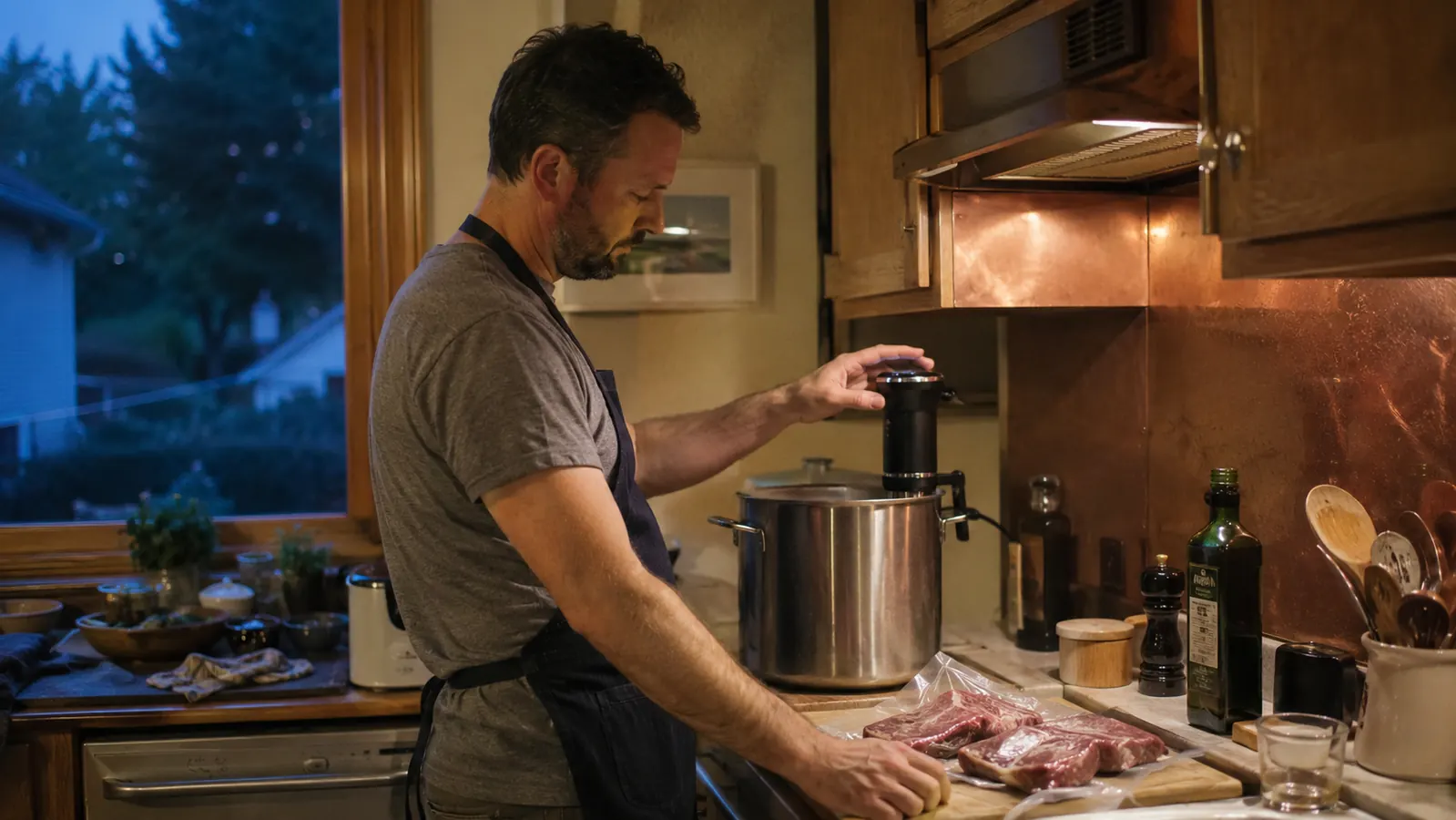
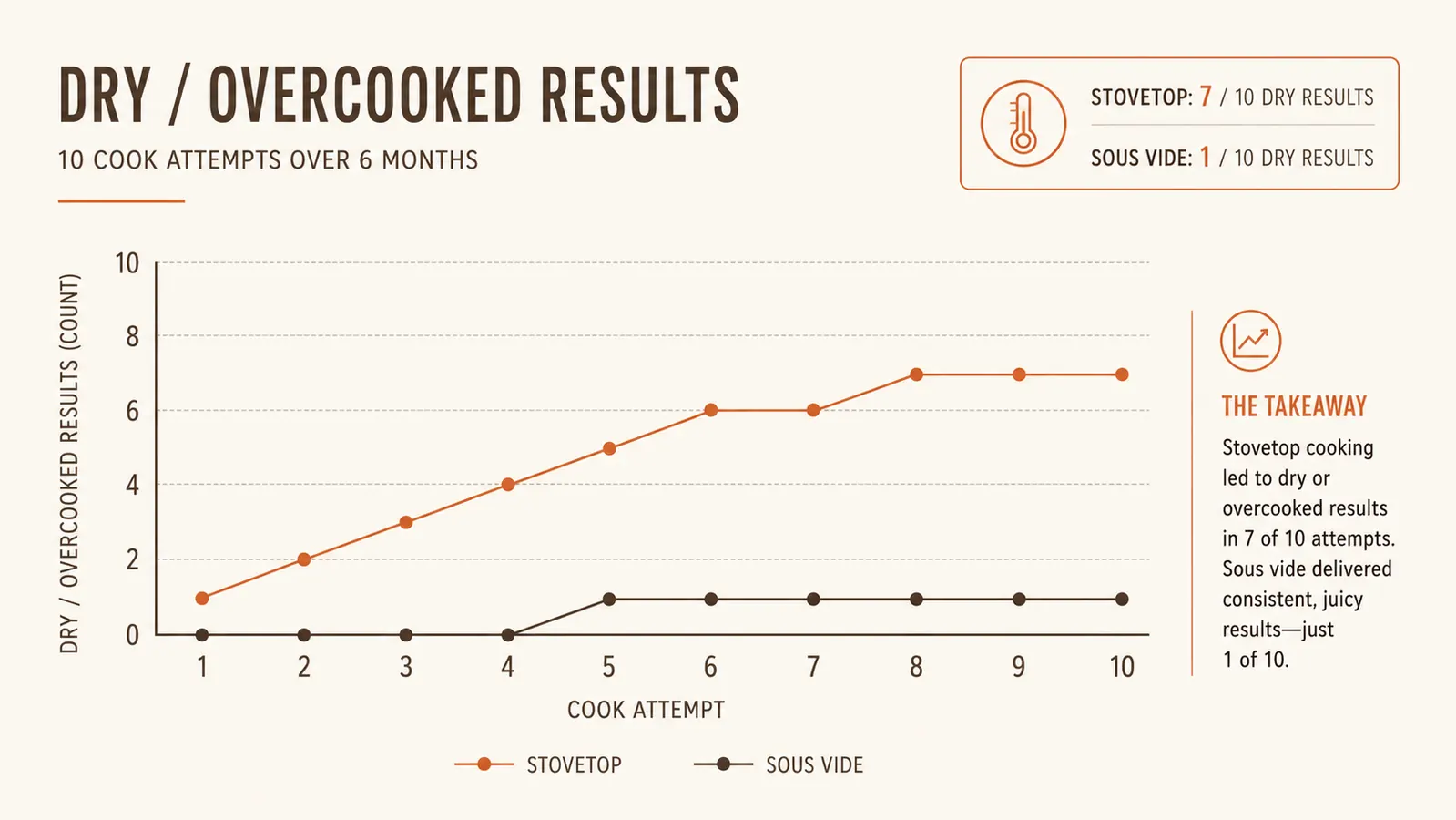
My chicken breast problem had a name before it had a solution: 6:15 PM, the exact minute I'd pull dinner off the stove already knowing by the color that it had gone from juicy to sawdust again. I'd heard the Anova name tossed around on a cooking forum more than once before I ever tried it, always in the context of steak night, never plain weeknight chicken, which is probably why it took me so long to bother. I own an instant-read thermometer. I know how to rest meat. None of that mattered when I was also answering a homework question and switching a load of laundry at the same time the stove needed watching. Six months ago I put an Anova Precision Cooker Nano 2.0, an Anova immersion circulator built for exactly this kind of problem, in the drawer next to my stove, mostly out of stubbornness after the fourth dry chicken dinner in a row, and it has turned into the one gadget I now reach for before anything else on a weeknight.
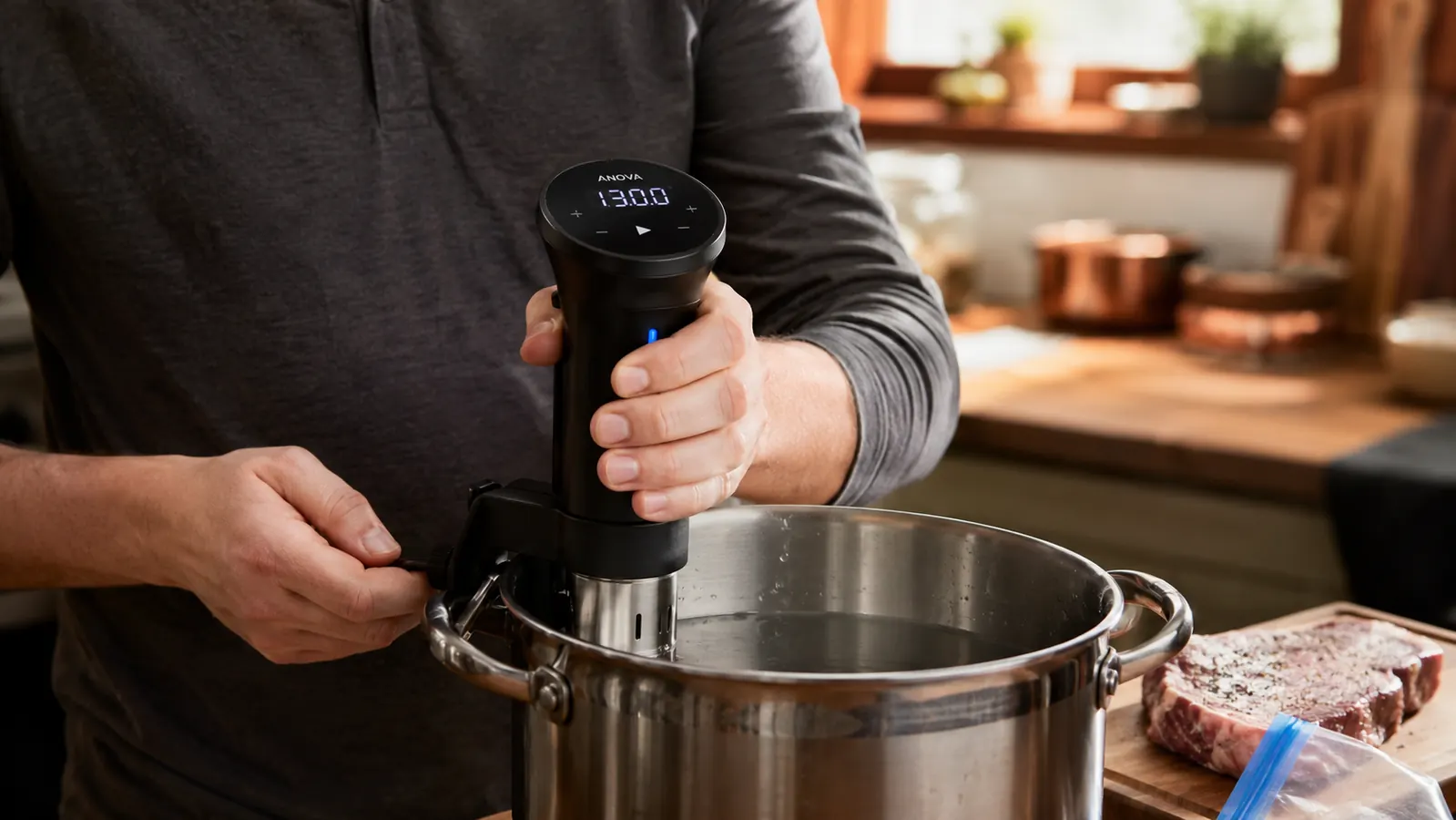
The Anova clips onto the side of any stockpot or big food-storage container I already own, heats the water to an exact temperature, and holds it there for as long as the timer runs. No watching the stove. No guessing whether the middle of a thick pork chop actually got past a safe internal temperature. My kitchen has maybe fourteen inches of usable counter between the stove and the sink, so the fact that the Anova lives in a drawer between uses and takes ninety seconds to set up is most of why it survived past the first month, when a lot of gadgets in this house get demoted to the top shelf of the pantry.
The Quick Verdict
The Anova Nano fixed my overcooked chicken and pork problem for good, but it asks for advance planning that a stovetop dinner never does.
Amazon Check Today's Price →Tired of guessing when the chicken is actually done?
The Anova Precision Cooker Nano 2.0 holds your water bath at the exact temperature you set, so the middle of the chicken breast is done the same time the outside is. Check today's price and current availability on Amazon.
Amazon Check Today's Price on Amazon →How I've Used It
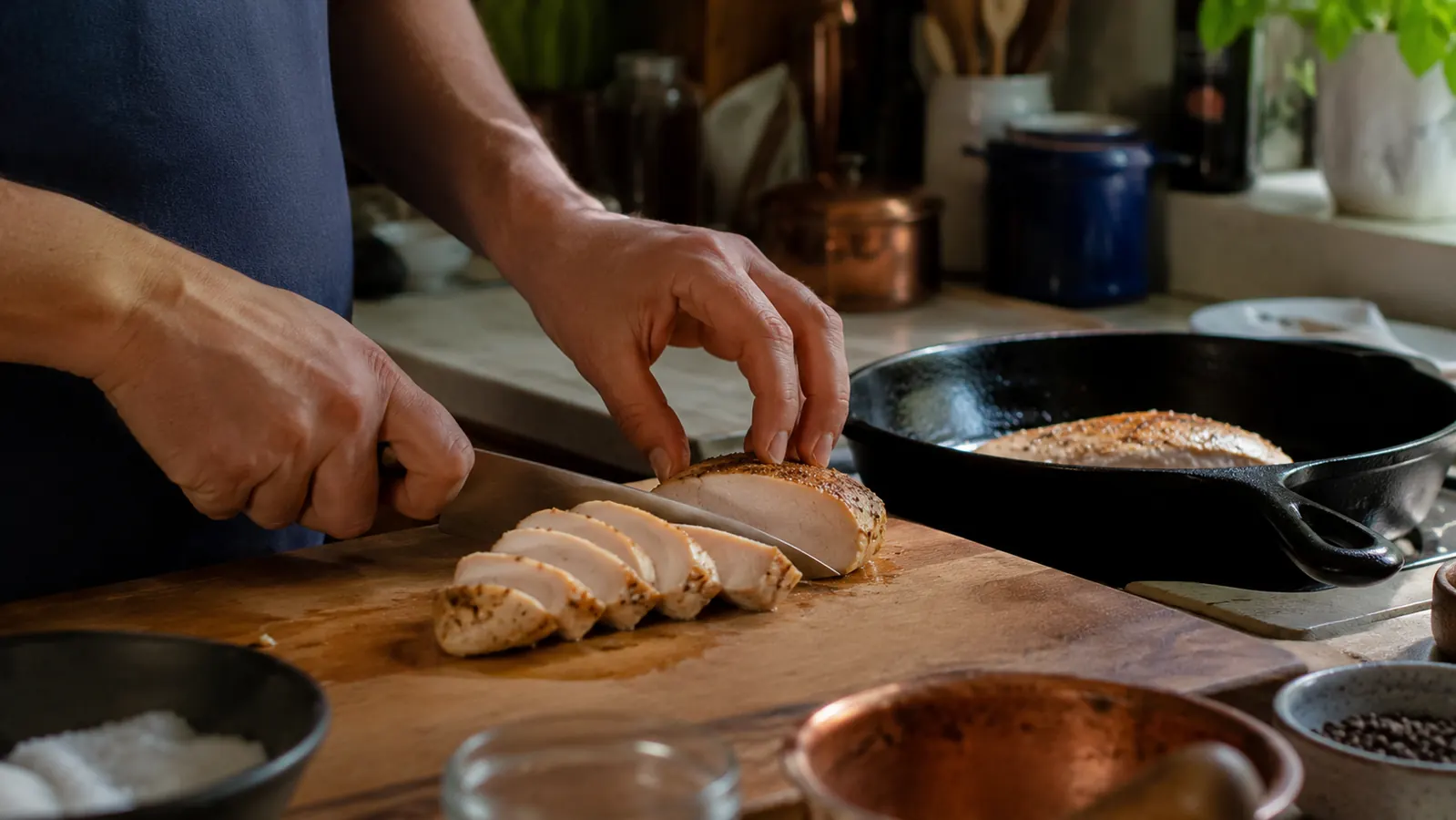
I did not buy the Anova for anything fancy. I bought it because I was tired of cutting into chicken breast at the dinner table in front of my kids and quietly deciding whether it was safe to serve. The first week I used it exactly the way the included booklet suggested: chicken breast at 146°F for an hour and a half, then a hard sixty-second sear in a hot cast iron pan on each side. It came out the same both nights I tried it, which had genuinely never happened to me before with chicken breast on a weeknight.
After that first week I stopped following recipes closely and started treating the Anova the way I treat my slow cooker: something I set up around 4 PM and forget about until it's time to sear and plate. Pork chops, chicken thighs, and a weekend batch of carrots have all gone through the water bath since. The learning curve is really just remembering that this method needs a head start, not that it's complicated to run.
The clip that attaches the Anova to my stockpot has held firm through every session so far, including the one time my younger kid bumped the counter running past for a snack. I do keep the pot pushed toward the back burner just as a habit now, more out of general kitchen caution than anything the device itself has done wrong.
The other thing I didn't expect was how it changed the way I plan the rest of dinner. Once the bag is in the water, I know exactly what time the protein will be ready, down to the minute, so I can time a side of roasted vegetables or rice to finish at the same moment instead of juggling three pans that all want attention at once. That kind of predictability is a small thing on paper, but it's made weeknight cooking feel less like triage.
Setting It Up on an Actual Weeknight
Here is the honest timeline. Around 4:30 PM I fill my 8-quart stockpot with water, clip the Anova onto the rim, set the temperature on the small screen or through the app, and drop the bagged chicken in once the display shows it's reached temperature. Then I go do the fifty other things a weeknight requires: help with homework, start a side dish, answer texts about who's driving to practice. At 6:00 PM I pull the bag out, pat the chicken dry, and give it a quick sear. Total hands-on time is maybe six minutes, split across two short windows.
The app on my phone is where the Anova has been the least consistent. It connects over Bluetooth most nights without any fuss, and it will send a notification when the water hits temperature or when the cook time finishes. Twice in six months it lost connection to my phone mid-cook, which meant I never got the finished notification and had to remember to check the pot myself. It never affected the actual cooking since the unit keeps running independent of the app, but it did undercut the whole point of being able to walk away and trust a phone alert.
I've also learned to weigh down the bag with a butter knife balanced across the pot rim, because a bag with any air left in it wants to float, and a floating bag means part of the chicken sits above the waterline and cooks unevenly. That's not really a flaw in the Anova, it's just something nobody tells you the first time, and I wish the included booklet had mentioned it directly instead of me figuring it out from a dinner that came out half right.
I've also started keeping a small notebook page taped inside the cabinet with the times and temperatures I actually use most, since the settings for chicken thighs and pork tenderloin are different enough that I don't trust myself to remember both after a long day. It took maybe three tries to land on numbers I'm happy with for each cut, and now I barely think about it, I just punch in the same settings and move on with dinner prep.
Cleanup and What Actually Lives in My Drawer
Cleanup is where the Anova has genuinely earned its keep. There's no basket to scrub, no pot with baked-on grease, because the food never touches the pot directly. I wipe the circulator down with a damp cloth, dry the clip, and put it back in the drawer next to the stove. The stockpot I use for the water bath is the same one I already owned for boiling pasta, so nothing new took up permanent counter space in my kitchen.
The one thing that does need occasional attention is a light buildup of mineral scale on the heating element after a few weeks of using our regular tap water, which is on the harder side here. A quick soak in a vinegar and water solution once a month clears it, and it takes less time than descaling my coffee maker used to.
Compared to the stand mixer and the panini press that both got demoted to the top shelf of my pantry within a few months of buying them, the fact that this thing still lives within arm's reach of the stove says a lot. Storage space is the real currency in a kitchen this size, and anything that doesn't earn a spot on the counter or in an easy-to-reach drawer eventually stops getting used at all, no matter how well it worked the first few times.
Who I've Found This Best For
This has become the default method in my house for anything that used to be a coin flip on the stove: boneless chicken breast, pork tenderloin, and thick-cut pork chops. Anyone who cooks for a family and has ever served slightly gray chicken at 6:30 on a Tuesday will understand exactly why I've kept using this device six months in instead of letting it collect dust like the waffle maker did.
It's also turned into my go-to for meal prep on Sundays. I'll run two or three bags of chicken breast at once in a bigger pot, portion them into the fridge, and reheat quickly during the week without the dry-out that happens when you reheat regular cooked chicken in the microwave.
It's also made a real difference for the one night a week I cook for my in-laws, since my father-in-law has mentioned more than once that he can taste the difference between a dry chicken breast and one that stayed juicy all the way through. Being able to set it up before they arrive and not think about the protein again until it's time to sear has taken a genuine amount of pressure off those dinners.
Where It Falls Short
The biggest tradeoff is time, not effort. Sous vide cooking needs a real head start, usually forty-five minutes to two hours depending on thickness, and there is no version of this that works if you're standing in front of an empty fridge at 5:45 asking what's for dinner. On nights I forget to start it, I'm back to the stove, and that's just the nature of the method rather than anything specific to this unit.
The other tradeoff is the extra dish of a sear pan at the end. Sous vide chicken and pork come out of the bag looking pale and unappetizing, so a hot skillet sear is not optional if you want any browning or crust. That's one more pan to wash than a simple sheet-pan dinner, though it's a fair trade for how the inside turns out.
I'll also say the small digital display on the unit itself is harder to read without reading glasses than I'd like, especially in a dim kitchen in the evening. I lean on the phone app for that reason more than I probably should, which brings back the Bluetooth issue from earlier. It's a minor complaint next to how consistently the actual cooking turns out, but it's the kind of detail that would have been nice to know about before buying rather than after.
What I Liked
- Consistent doneness on chicken and pork every single time
- Clips onto a stockpot I already owned, no new counter space needed
- Cleanup is just wiping down the unit, no scrubbing baked-on grease
- Runs independently even if the app disconnects
- Quiet enough to run during dinner prep without being distracting
Where It Falls Short
- App lost Bluetooth connection twice in 6 months
- Requires 45 minutes to 2 hours of lead time, no last-minute option
- Bags need weighting down or they float and cook unevenly
- Still need a hot pan for the final sear, one extra dish
The Anova didn't make me a better cook. It just removed the one variable I could never eyeball right, which turned out to be the only variable that mattered.
Who This Is For
If dinner in your house regularly comes down to chicken breast, pork chops, or anything lean that dries out the second you look away, this is worth the drawer space. It's especially good for anyone who already does some kind of Sunday prep, since the hands-off cook time fits naturally into a batch-cooking routine, and for anyone who has a stockpot sitting around already and doesn't want to buy a dedicated water oven.
Who Should Skip It
If your weeknights genuinely don't allow for a 45-minute head start, or if most of what you cook is ground meat, pasta, and sheet-pan vegetables that don't have the same overcooking risk, you probably won't use this enough to justify the drawer space. It's also not the right pick if you're looking for something that shortens total cook time rather than making the result more consistent.
Six months later, this is still the first thing I reach for on chicken night
If dry chicken breast or tough pork chops are a recurring problem in your kitchen, the Anova Precision Cooker Nano 2.0 is worth a look. See current pricing and availability on Amazon.
Amazon Check Today's Price on Amazon →