
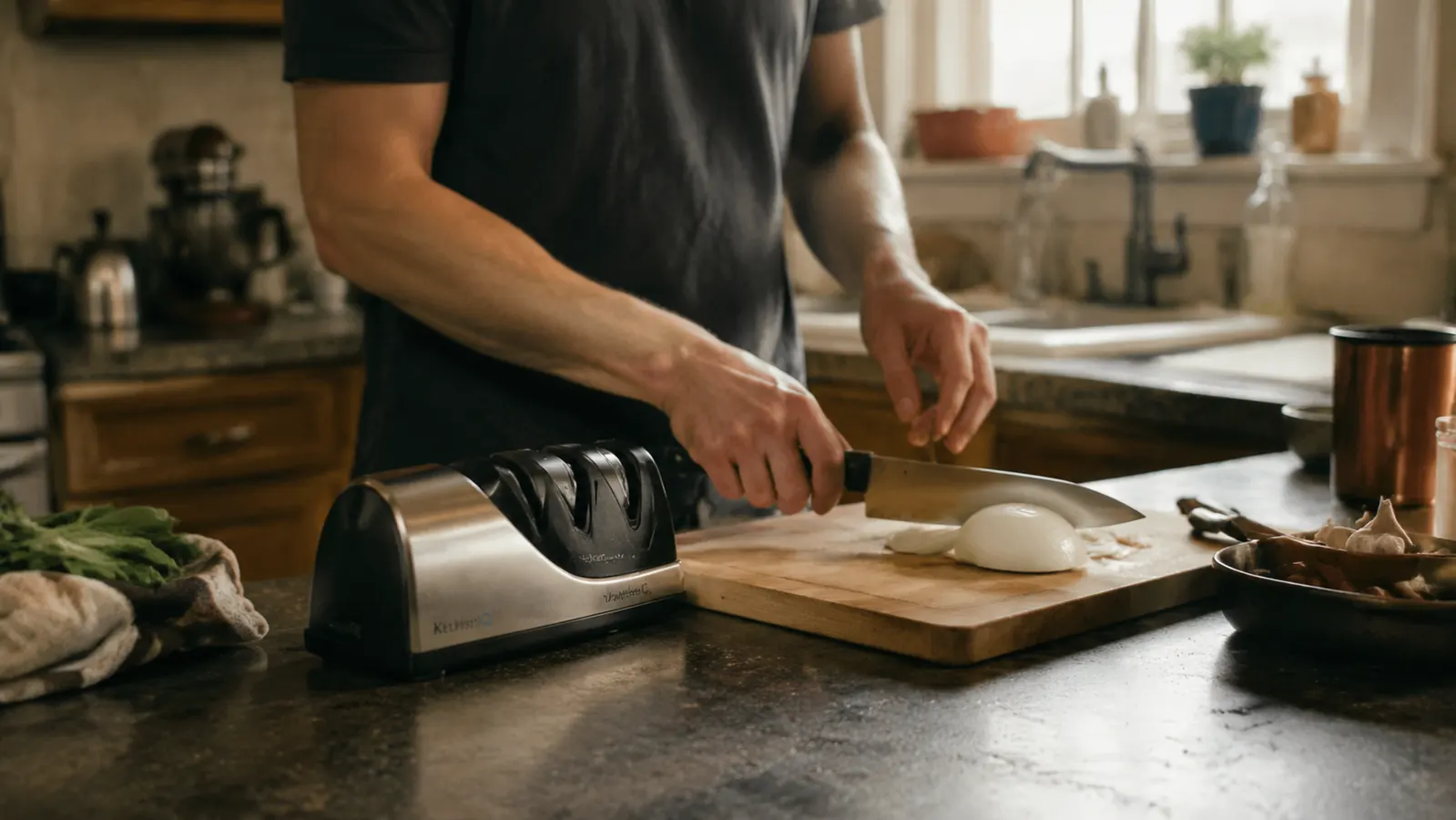
My chef's knife used to skate off the skin of a tomato instead of slicing into it. I noticed it first on a random Tuesday, trying to get dinner going before my daughter's homework meltdown started, and the knife just would not bite. I pressed harder, which is exactly the wrong instinct with a dull blade, and ended up with a squashed tomato and a mildly bruised thumb. That was the night I finally ordered the Presto EverSharp electric knife sharpener, after almost two years of telling myself I'd get my knives professionally sharpened someday.
Someday never came, the way it doesn't for most of us. My knives sat in a wooden block on the counter looking fine while quietly getting worse every week, and I kept compensating by pressing harder instead of admitting the problem was the edge, not my technique. Six months later, the Presto EverSharp has been sitting next to that same knife block, and I've used it enough times now to tell you honestly what it's good at and where it falls short.
The Quick Verdict
A genuinely simple way to keep everyday kitchen knives sharp at home, though it won't replace a whetstone for serious edge work or repair badly damaged blades.
Amazon Check Today's Price →Still pressing harder on a knife that should be cutting for you, not fighting you?
See today's price and current availability for the Presto EverSharp Electric Knife Sharpener on Amazon before your next prep session.
Amazon Check Today's Price on Amazon →How I've Used It
My kitchen isn't set up for elaborate knife care rituals. I have a narrow galley layout with one 22 inch stretch of counter between the sink and the stove, and whatever tool I add to my routine has to fit into a spare two minutes, not a whole separate session. I've run the Presto EverSharp on three knives over these six months: my main 8 inch chef's knife, a smaller paring knife I use for garlic and shallots, and an older serrated bread knife that honestly needed the help most.
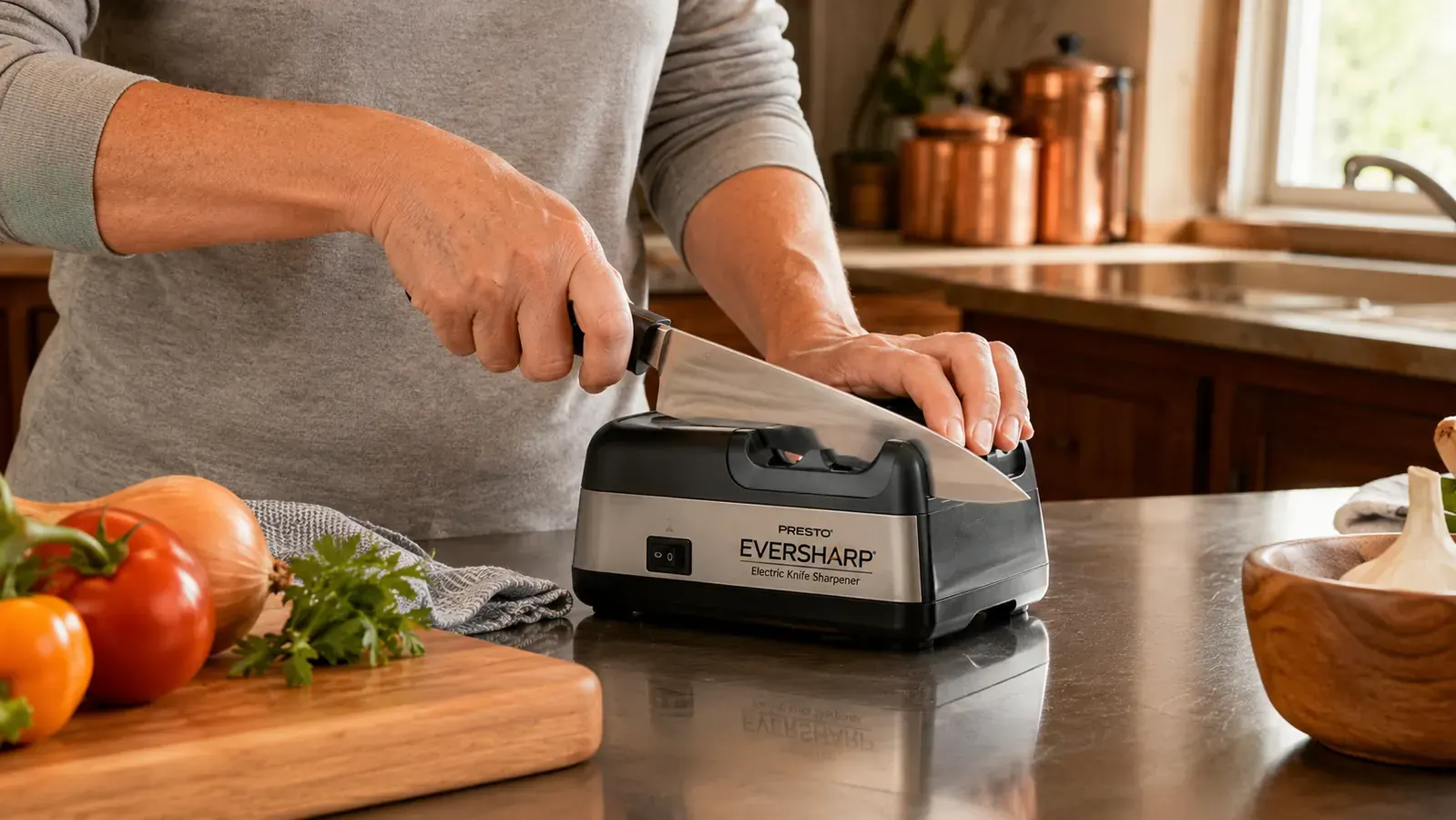
The first time I used it, I stood at the counter for a solid ten minutes just reading the little diagram on the box, worried I'd ruin a knife I'd had for years. Turns out there wasn't much to worry about. You pull the blade through the coarse slot a few times, then the fine slot, keeping light and even pressure and letting the guides do the angling for you. No guessing at a 17 or 20 degree angle by eye, no stone to keep flat and wet. That alone is the entire reason I stuck with it past week one.
By the second month I had it down to a habit, not a chore. Sunday afternoons, while dinner leftovers were reheating, I'd run my chef's knife through a few passes on the fine slot just to keep it tuned up. It takes less time than it took me to type this sentence. That kind of low-friction maintenance is exactly what got a knife sharpener to actually earn a permanent spot on my counter instead of joining the waffle iron in the cabinet of forgotten appliances.
What's Actually Inside the Two Slots
The Presto EverSharp works on a two stage system, and understanding what each stage does made a real difference in how I used it. The first slot has coarse diamond abrasive wheels that reshape a dull or slightly damaged edge, the kind of thing that happens after months of cutting boards, bones, and the occasional accidental scrape against a ceramic plate. The second slot is finer and polishes that reshaped edge into something that actually slices instead of just chops.
The mistake I made early on was running every knife through both slots every single time, out of habit more than need. That's overkill, and it wears away more metal than necessary. Once I learned to reach for the coarse slot only when a knife was genuinely struggling, maybe once every six to eight weeks per knife, and use the fine slot for the quick weekly touch-up, my knives held their edge longer and I wasn't grinding away material I didn't need to lose.
The spring-loaded guides are the part that makes the Presto EverSharp forgiving for someone like me who never learned proper knife sharpening technique growing up. They hold the blade at a consistent angle so you can't really sharpen one side more than the other, which used to be my exact problem with a manual pull-through sharpener I owned years ago. That older sharpener left my knives with a lopsided edge that cut fine on one side and dragged on the other. I haven't had that problem once with the Presto.
It's not silent. There's a motor running the abrasive wheels, and it sounds a bit like a small kitchen mixer on low, loud enough that I don't use it while anyone's on a phone call in the next room, but not so loud it's ever bothered a sleeping kid down the hall. Compared to the manual sharpener I replaced, which needed more elbow grease and more passes to get anywhere close to this result, the noise is a fair tradeoff for how much faster the job gets done.
Six Months of Onions, Bread, and One Stubborn Squash
The real test of any sharpener isn't the first use, it's whether the edge holds up under actual weeknight cooking. I chop a lot of onions, more than I'd like to admit, and a dull knife makes that job miserable in a way that has nothing to do with tears. Onions need a clean slice, not a crushing motion, or you end up bruising the layers and losing that crisp texture in whatever you're cooking. After a fine-slot pass on the Presto EverSharp, my chef's knife has consistently gone through a whole onion without me needing to reposition or saw at it.
The bread knife was the bigger surprise. I didn't expect a serrated blade to respond well to this kind of sharpener, since most serrated knives need specialized attention to their individual teeth, but the EverSharp does have a slot designed to work the flat bevel between those serrations without flattening them out. My bread knife had gotten to the point where it was tearing crusty sourdough instead of slicing it clean, and after two rounds through the sharpener over a couple months, it's back to cutting clean slices without shredding the crumb.
Then there was the butternut squash incident in month four. I was breaking down a squash for soup, and the skin on that particular one was thicker and tougher than usual. My knife, freshly sharpened the week before, went through it without the wobbling or slipping that used to make me nervous about cutting toward my fingers on dense vegetables. That's the moment it really clicked for me that this wasn't just about convenience, a genuinely sharp edge is safer to use than a dull one, because you're not forcing the blade or compensating with awkward pressure.
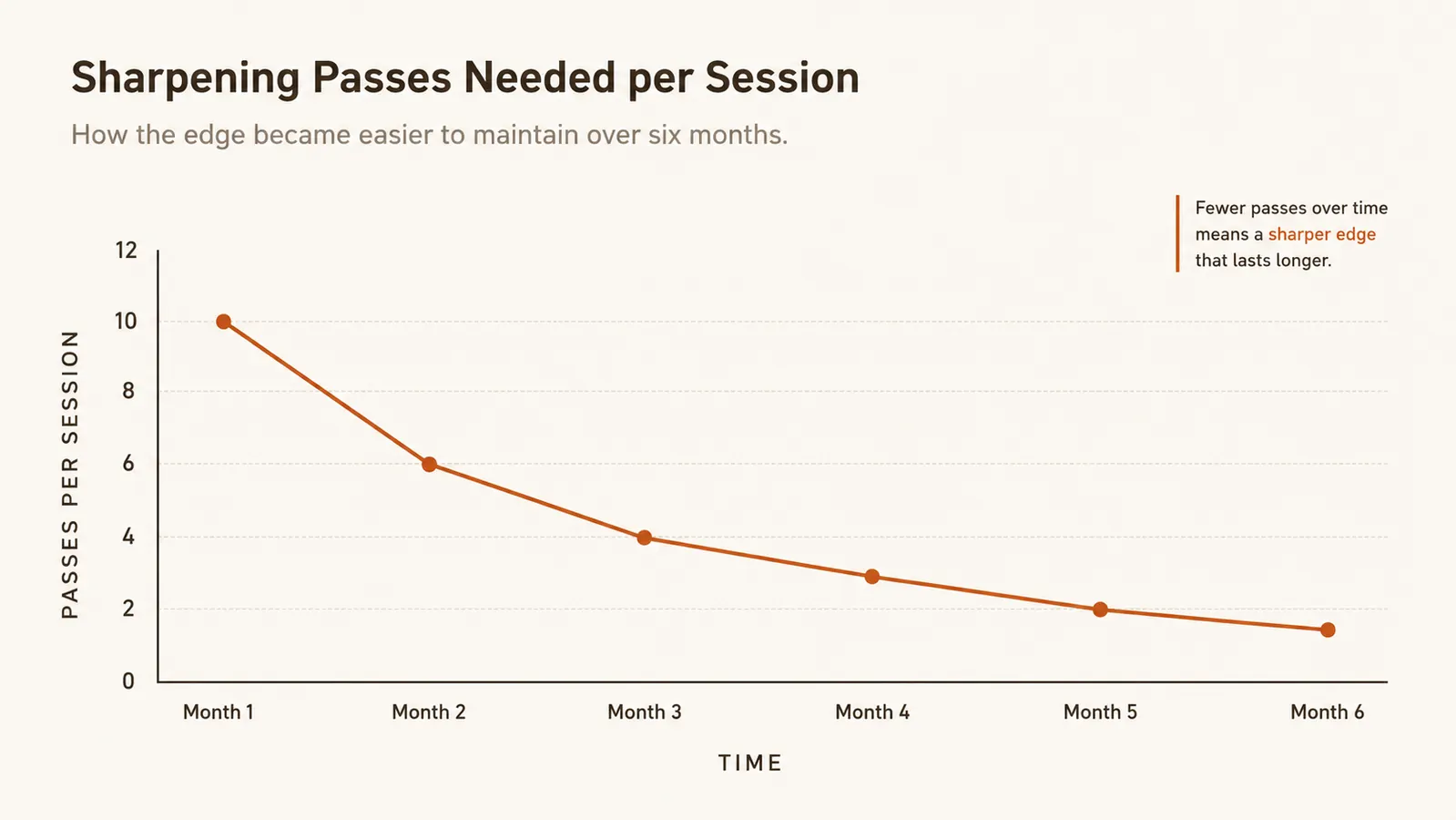
Around month five I noticed the sharpening sessions were getting shorter. Where I used to run a knife through the fine slot five or six times to get the result I wanted, two or three passes started doing the job. I think that's because consistent light maintenance keeps the edge from degrading as far between sessions, so there's simply less work for the Presto EverSharp to do each time. It's a small thing, but it's the kind of detail you only notice after living with a tool for months, not days.
Where It Struggles
I want to be fair about the limits here, because no sharpener fixes everything. My paring knife had a small chip near the tip from an accident with a can lid years ago, and the EverSharp's coarse slot smoothed the area around it but didn't fully remove the chip in one or two sessions. It took several rounds over a couple of months before that chip finally disappeared, and if you're dealing with genuinely damaged blades, a whetstone or a professional sharpening service will get you there faster.
It also doesn't do much for knives with unusual geometry. I have one Japanese-style santoku with a thinner, more delicate edge angle, and I've been hesitant to run it through the EverSharp's slots at all, since the fixed angle guides are set up more for standard Western-style knives. I still hand sharpen that one on a whetstone occasionally, which is the honest tradeoff, this tool handles my everyday knives beautifully and leaves the specialty piece to a different method entirely.
The other thing worth knowing is that it does remove metal every time you use the coarse slot, same as any sharpening method. If you're the type who wants to sharpen a knife every single day out of habit rather than need, you'll wear down a blade faster than necessary. I've settled into using the fine slot weekly and the coarse slot only when a knife genuinely needs reshaping, and that balance has kept my knives performing well without shrinking them down prematurely.
What I Liked
- Two-stage system reshapes and polishes without guessing at an angle
- Spring-loaded guides keep both sides of the edge even, unlike a manual pull-through
- Works well on standard chef's, paring, and even serrated bread knives
- Quick enough for a weekly two-minute touch-up between deeper sharpening sessions
- Consistent results held up across six months on the same three knives
Where It Falls Short
- Won't fully remove a chipped edge in one or two sessions, takes patience
- Fixed angle guides aren't ideal for thin-edged Japanese-style knives
- Motor noise is noticeable, not loud but present enough to notice nearby
- Removes metal with every coarse-slot pass, so overuse shortens blade life
Who Else I Considered
Before buying the Presto EverSharp, I seriously considered just learning to use a whetstone properly. I watched a handful of videos and even bought a cheap stone that's still sitting in a drawer, mostly untouched, because getting the angle right by feel takes real practice I never found time for on a weeknight. I also looked at a couple of other electric sharpeners in a similar price range, one of which had more sharpening stages but read like it was aimed at people who sharpen professionally or semi-professionally rather than a home cook trying to keep three knives usable.
What tipped it toward the EverSharp for me was simplicity. Two slots, a clear order of operations, and guides that do the hard part of holding the angle steady. I didn't need six sharpening stages for a bread knife and a chef's knife I use nightly. I needed something I'd actually use on a Tuesday, and a tool with too many steps was going to end up exactly like that whetstone in my drawer.
I didn't buy this to become a knife expert. I bought it so slicing a tomato would stop feeling like a small act of violence against my own dinner.
Who This Is For
If you cook most nights and your knives are standard Western-style blades, chef's, paring, utility, even a serrated bread knife, the Presto EverSharp fits neatly into a routine without demanding a new skill set. It's built for people who want a reliable edge without learning whetstone technique, and who'd rather spend two minutes a week than an hour every few months. If your knives have started skating off tomato skin the way mine did, this is a straightforward fix that doesn't require sending anything out or waiting on a mail-in service.
Who Should Skip It
If you own expensive Japanese-style knives with thin, specialized edge angles, or you already have real whetstone skills you enjoy using, this probably isn't the upgrade you're looking for. It's also not the right tool for badly chipped or damaged blades that need serious reshaping, that's a job better suited to a professional sharpening service or a lot of patient time on a coarser stone. For everyday cutlery in a working home kitchen, though, it's held up exactly the way I hoped it would across six months of actual use.
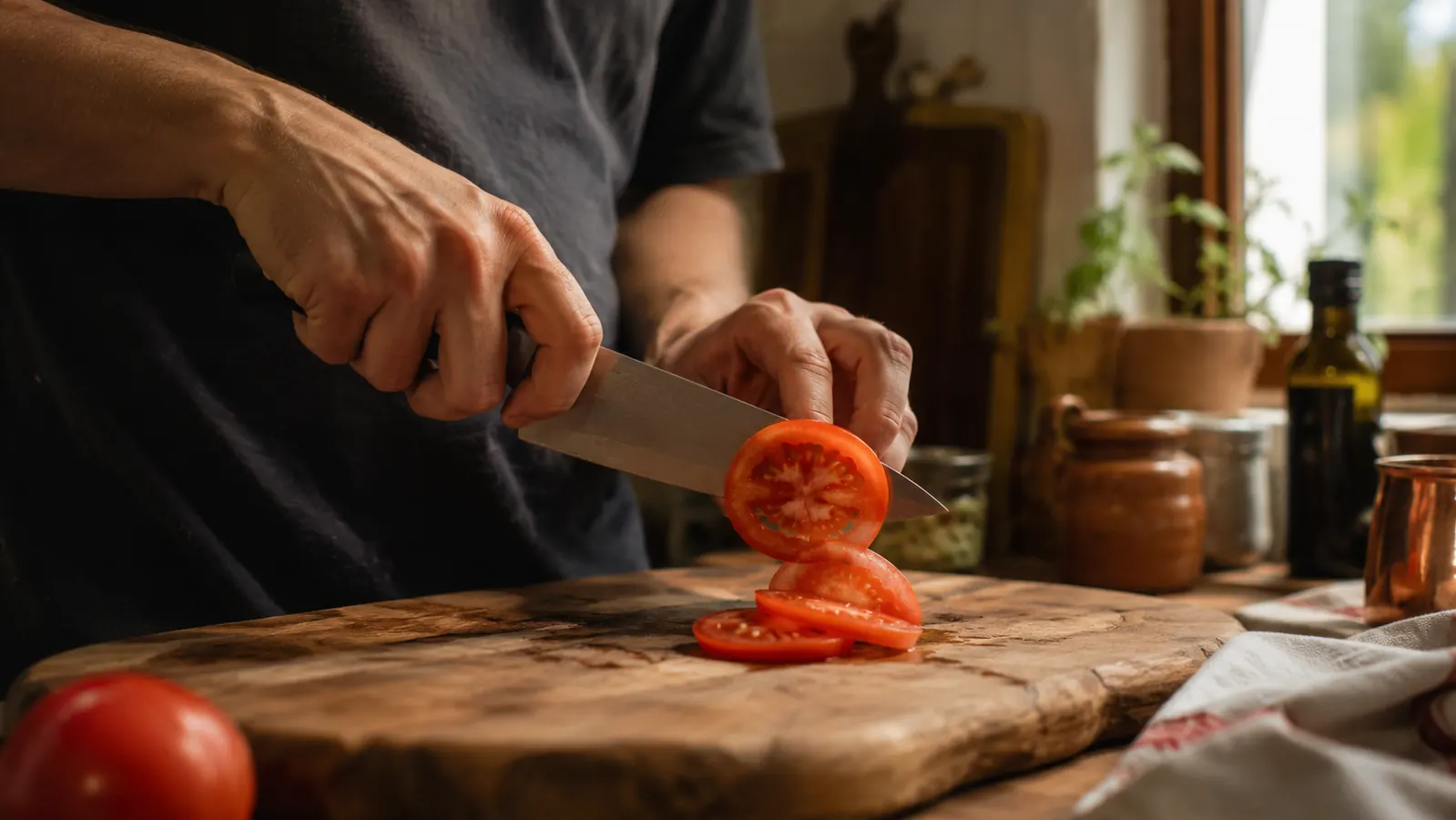
If your knives have started fighting you back, this is the fix I actually kept using
Check today's price on the Presto EverSharp Electric Knife Sharpener and see if it's in stock for your kitchen.
Amazon Check Today's Price on Amazon →